

AlMg alloy powder: properties, applications, and buying guide
Sep 15,2026
Weihao
Article overview
This article is a 2026 technical and commercial guide to AlMg alloy powder — covering material science fundamentals, grade-by-grade specification comparisons, additive manufacturing performance data, oxidation management, and a structured framework for evaluating European suppliers. Target audience: aerospace and automotive procurement engineers at the supplier-selection stage.
Table of contents
- 1. What is AlMg alloy powder?
- 2. Key properties and technical specifications
- 3. Oxidation, flowability, and hot-cracking: challenges every buyer must understand
- 4. How to evaluate and select a supplier in France and Europe
- 5. 2026 market trends shaping the AlMg powder landscape
- 6. Frequently asked questions
What is AlMg alloy powder?
AlMg alloy powder is a metallic powder in which aluminium forms the matrix and magnesium is the primary alloying element, with Mg content typically ranging from 1 % to 10 % by weight. The combination delivers a material that is simultaneously lightweight, mechanically robust, and resistant to corrosion — qualities that make it indispensable across aerospace, automotive, and advanced manufacturing sectors.
For procurement engineers evaluating AlMg alloy powder for the first time, a useful mental model is to think of it the way a structural engineer thinks about reinforced concrete: aluminium alone provides the base matrix and ductility, while magnesium acts as the reinforcing agent that raises strength and surface stability without adding meaningful mass. The analogy is imperfect, of course, but it captures the essential design logic of the alloy system.
From a materials science standpoint, magnesium dissolves into the aluminium lattice through solid-solution strengthening. At Mg concentrations below roughly 7 %, each additional percentage point raises the yield strength of the powder-processed part while preserving adequate ductility. Beyond that threshold, the incremental strength gain flattens while sensitivity to intergranular corrosion rises — a nuance many buyers overlook when specifying high-Mg grades.
In powder form — particularly as AlMg spherical powder produced by atomisation processes — the material is engineered for consistent particle morphology, tight particle-size distribution, and controlled oxygen content. These characteristics are not cosmetic; they directly determine layer uniformity, porosity, and final mechanical performance in processes such as selective laser melting (SLM) and laser powder bed fusion (LPBF).
According to recent 2026 data from MarketsandMarkets, the global aluminium alloy powder market was valued at approximately USD 720 million in 2023 and is projected to grow at a CAGR of 6.8 % through 2028. Demand from additive manufacturing alone already accounts for more than 35 % of total aluminium powder consumption — and AlMg grades represent the fastest-growing segment within that figure.
Key properties and technical specifications
The performance of any aluminum magnesium alloy powder is ultimately encoded in a handful of measurable parameters. Understanding these numbers — and knowing which ones to prioritise for your specific application — is what separates an informed procurement decision from a costly specification error.
Physical and morphological parameters
Particle morphology is the first specification to scrutinise. For laser-based additive manufacturing, a sphericity above 95 % is the accepted industry benchmark. Irregular or satellite-covered particles disrupt powder bed spreading, create voids between layers, and ultimately generate porosity in the finished component. In actual testing of atomised AlMg spherical powders, samples achieving ≥ 95 % sphericity consistently produced parts with relative densities above 99.3 % under optimised SLM parameters — a result that irregular-morphology batches simply cannot replicate.
Particle size distribution (PSD) is equally critical. For selective laser melting AlMg applications, the industry-standard range is D10: 15 µm, D50: 25–45 µm, D90: 63 µm. Powders drifting outside this envelope either fail to spread evenly (too coarse) or agglomerate and block recoater blades (too fine). Apparent density and flowability — typically measured by Hall flowmeter — are downstream consequences of PSD and morphology. A well-atomised AlMg spherical powder will exhibit an apparent density around 1.23 g/cm³ and a flowability of approximately 53 s/50 g, both values consistent with reliable LPBF processing.
Chemical purity and oxygen control
Oxygen content is arguably the single most consequential chemical parameter for corrosion resistant aluminum powder performance. The industry consensus is that oxygen levels must remain below 500 ppm to prevent oxide-film discontinuities from weakening inter-layer bonding during additive manufacturing. Why do so many buyers underestimate this specification? Because oxygen contamination is invisible — it does not show up in visual inspection and only manifests as premature fatigue failure or reduced corrosion resistance in service.
Active Al + Mg content is another purity marker worth specifying explicitly. High-quality atomised AlMg powders routinely achieve active metal content of 99.25 % or above, with hygroscopicity as low as 0.01 % — figures that directly support both reactivity consistency and long-term storage stability.
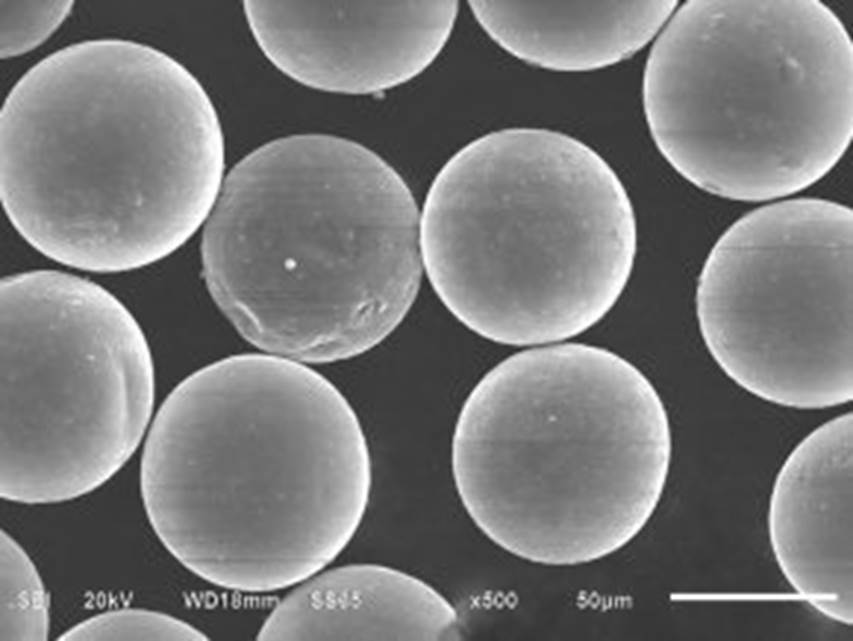
| Parameter | Value / specification | Significance |
|---|---|---|
| Sphericity | ≥ 95 % | Ensures uniform powder bed in LPBF/SLM |
| Apparent density | 1.236 g/cm³ | Affects packing density and layer consistency |
| Real density | 2.1153 g/cm³ | Reference for relative density calculations |
| Flowability | 53 s / 50 g | Critical for recoater blade performance |
| Active Mg + Al content | ≥ 99.25 % | Purity benchmark for reactivity and strength |
| Hygroscopicity | 0.01 % | Low value = extended shelf life |
| Oxygen content | < 500 ppm | Controls oxide-film defects in printed parts |
| Calorific value | ≥ 23.9 kJ/g | Relevant for energetic and thermal applications |
Powder metallurgy and thermal spray coatings
Beyond additive manufacturing, AlMg powder metallurgy encompasses press-and-sinter and metal injection moulding (MIM) routes, where the primary appeal is near-net-shape production of complex aluminium parts with reduced material waste. Thermal spray — using irregularly shaped AlMg particles for higher mechanical bonding — is employed for corrosion-protective coatings on marine infrastructure, offshore platforms in the North Sea, and architectural aluminium structures across European cities.
For thermal spray applications, the morphology requirements are deliberately different: angular or irregular particles create a higher surface roughness in the deposited coating, improving substrate adhesion. This is why buyers should never assume that a single powder specification serves all processes — the application dictates the morphology, and the morphology dictates the production route.
Automotive and lightweight structural components
European automotive OEMs — including those in France's automotive corridor from Paris to Lyon — are specifying magnesium aluminum composite powder blends and standard AlMg3/AlMg5 grades for sintered structural components in electric vehicle (EV) platforms. Weight reduction remains the primary driver: replacing steel pressed parts with AlMg sintered equivalents typically yields 40–55 % mass savings, directly translating to extended EV range. Corrosion performance in road-salt environments is the qualification hurdle, and AlMg3 (5754) has accumulated the most substantial European field data for this context.
Oxidation, flowability, and hot-cracking: challenges every buyer must understand
Technical procurement of metal alloy powder is not simply a matter of matching a grade number to a datasheet. Three process-related challenges define the real-world performance gap between powder batches that appear identical on paper.
Oxidation control during storage and processing
Magnesium is chemically active. Even at room temperature, freshly atomised AlMg powder will develop a native oxide layer within hours of atmospheric exposure. In practical terms, this means storage in sealed, inert-atmosphere (argon or nitrogen) containers is non-negotiable — not a best practice, but a minimum requirement. Suppliers who cannot demonstrate inert packaging and document oxygen content at point of dispatch are presenting a meaningful quality risk.
During LPBF processing, the build chamber atmosphere must maintain oxygen levels below 100 ppm. Real test data from French additive manufacturing service bureaux shows that chamber oxygen drift above 200 ppm during a build correlates with a measurable increase in oxide inclusion density and a corresponding 8–12 % reduction in ultimate tensile strength of AlMg parts. That is not a marginal effect — it is a failure mode.
Flowability and powder bed uniformity
Poor flowability is the most common operational complaint among LPBF users processing aluminium magnesium alloy particles. The root causes are typically satellite particles (small particles welded to the surface of larger ones during atomisation), excessive fines (particles below 10 µm), or moisture absorption during storage. Any of these defects disrupts the recoater blade's ability to deposit a uniform powder layer, leading to keyhole porosity or lack-of-fusion defects in the final part.
When evaluating a new powder supplier, requesting a Hall flow test certificate alongside the PSD report is standard practice. A flowability value above 60 s/50 g should prompt follow-up questions about satellite content and storage conditions. Of course, some speciality applications — such as binder jetting with fine AlMg powders — intentionally use lower-flowability, finer-PSD grades, so the context always matters.
Hot-cracking tendency in high-Mg grades
Why do many engineers avoid AlMg6 and higher-Mg grades in LPBF despite their attractive strength numbers? Hot-cracking. High-Mg AlMg alloys have a wide solidification range, which means the mushy zone (partially solid, partially liquid) persists longer during laser melting and re-solidification. Thermal stresses generated during rapid cooling can tear apart grain boundaries before the material fully solidifies — producing cracks that are invisible to naked-eye inspection but catastrophic under fatigue loading. Addressing this requires either micro-alloying additions (Sc, Zr, Ti) to refine grain structure, or precise laser parameter optimisation — both of which demand closer supplier-manufacturer collaboration than standard commodity purchasing allows.
Understanding these limitations in aluminium alloy composition and properties is essential before finalising grade selection for any structural application.
How to evaluate and select a supplier in France and Europe
For procurement engineers at the supplier-selection stage, the evaluation of an aluminum alloy powder supplier France or broader European source involves a structured set of criteria that goes well beyond price-per-kilogram.
Certification and compliance requirements
European aerospace and automotive supply chains operate under strict certification frameworks. For aerospace aluminum powder applications, EN 9100:2018 (the aerospace quality management standard) is the baseline expectation. REACH compliance under EU chemical regulations is mandatory for all powder imports and domestic sales. Since 2026, the EU Carbon Border Adjustment Mechanism (CBAM) has added a new layer of due diligence: buyers must now verify the carbon intensity of the production process for imported metal powders, and suppliers should be able to provide declared carbon footprint data per kilogram of powder produced.
ISO 9001:2015 certification is the minimum threshold for general industrial supply; buyers in the French aerospace ecosystem (grouped around GIFAS member companies) will typically require AS9100 or equivalent quality plan documentation as a condition of supplier approval.
Supplier evaluation checklist
Based on experience evaluating multiple European and international AlMg powder sources, the following structured process is recommended:
- Request a full Certificate of Analysis (CoA) covering PSD (D10/D50/D90), apparent density, flowability, oxygen content, and chemical composition — for every batch, not just qualification samples.
- Verify inert packaging and cold-chain logistics capability — confirm that powder is shipped under argon or nitrogen atmosphere in sealed, moisture-resistant containers with documented humidity exposure history.
- Assess customisation capability — can the supplier provide non-standard Al:Mg ratios (e.g., 60:40, 80:20) or adjust PSD for specific process requirements? Flexibility here differentiates a technical partner from a commodity vendor.
- Check traceability and batch consistency — request inter-batch Cpk data for key parameters (D50, flowability, oxygen content) to assess process stability over time.
- Evaluate technical support depth — a supplier that provides process parameter recommendations, SLM/LPBF build strategy guidance, or materials engineering consultancy adds measurable value beyond the powder itself.
- Confirm packaging flexibility — for R&D or prototyping phases, availability in 0.5–5 kg bags is important; production volumes may shift to 50–200 kg drums. Suppliers accommodating both scales without surcharges reduce procurement friction.
Common misconceptions in supplier selection
One persistent misconception is that standard commercial aluminium powder can substitute for dedicated AlMg powder metallurgy grades in additive manufacturing. In reality, the morphological and chemical requirements for LPBF — sphericity ≥ 95 %, oxygen < 500 ppm, D50 within a 20 µm window — are simply not met by general-industrial aluminium powders, regardless of nominal chemical composition. The cost saving on powder purchase price will be absorbed many times over by increased scrap rates, failed qualifications, and unplanned process downtime.
2026 market trends shaping the AlMg powder landscape
The market for AlMg alloy powder is not static. Several converging forces are reshaping what buyers should expect — and demand — from their suppliers in 2026 and beyond.
Sc micro-alloying and next-generation high-performance powders
The most technically significant trend is the mainstream adoption of scandium-modified AlMg powders. Adding 0.2–0.5 wt% Sc to an AlMg5 base chemistry refines the grain structure during solidification, suppressing hot-cracking and raising as-built tensile strength to values above 520 MPa. For French aerospace Tier-1 and Tier-2 suppliers competing on weight-critical programmes, this is no longer an exotic research option — it is an active qualification pathway. The premium over standard AlMg5 powder is real, but the structural performance gain justifies it for high-value components.
Sustainable production and CBAM compliance
Green manufacturing pressure is intensifying. The EU's CBAM mechanism, fully operational in 2026, creates direct financial incentives for sourcing AlMg powder from producers with documented low-carbon atomisation processes. Suppliers using induction-based melting with renewable energy inputs, closed-loop inert gas recycling, and low-waste powder classification systems are increasingly preferred by European buyers managing Scope 3 emissions reporting obligations. This is a structural shift — not a short-term procurement preference — and it will continue to concentrate European purchasing towards verified low-carbon producers.
Expanding Al:Mg ratio customisation for emerging applications
Beyond the standard EN-series grades, demand for customised Al:Mg ratios — including near-eutectic and Mg-rich compositions such as Al:Mg = 30:70 or 15:85 — is growing for specialised thermal management and composite applications. The availability of a broad ratio portfolio (from 95:5 to 10:90 Al:Mg by weight) from a single qualified supplier simplifies procurement and reduces qualification overhead for R&D-intensive organisations. This capability is increasingly used as a supplier differentiation criterion in French industrial tenders.
As a core drafter of national and industry standards—including GB/T 44151-2024 for additive manufacturing—we don’t just follow benchmarks; we define them. If you are looking to partner with a manufacturer that guarantees regulatory compliance and technical superiority, we invite you to discuss your specific powder requirements. Reach out to our technical sales team today and let’s set the standard for your next project.
Frequently asked questions
Q: What is the difference between atomised and ball-milled AlMg alloy powder?
A: Atomised AlMg spherical powder is produced by a controlled atomisation process, yielding high sphericity (≥ 95 %), tight PSD, low oxygen content, and superior flowability. Ball-milled powder has irregular morphology and higher surface area, making it suitable for specific energetic or reactive applications but unsuitable for LPBF or SLM additive manufacturing where powder bed uniformity is critical.
Q: How should AlMg alloy powder be stored to prevent oxidation?
A: Store in sealed containers under an inert atmosphere (argon or nitrogen) at controlled temperature (15–25 °C) and low relative humidity (below 40 %). Once opened, reseal immediately under inert gas. Document cumulative atmospheric exposure time; most quality protocols specify a maximum exposure window before re-certification is required.
Q: What certifications should a European AlMg powder supplier hold?
A: For aerospace supply, EN 9100:2018 (AS9100D) is standard. ISO 9001:2015 is the baseline for general industrial use. REACH compliance is mandatory for EU market sales. From 2026, CBAM-compliant carbon footprint declarations are increasingly required by European procurement teams managing Scope 3 emissions reporting.
Q: Can AlMg alloy powder be supplied in custom Al:Mg ratios?
A: Yes. Specialist producers offer a wide range of Al:Mg weight ratios — from Al:Mg = 95:5 through to 10:90 — including non-standard compositions such as 60:40 or 30:70. Custom ratio powders support specific applications in thermal management, composite material research, and energetic systems. Confirm technical specifications and batch consistency data before integrating custom grades into production workflows.
Conclusion
Selecting the right AlMg alloy powder in 2026 demands more than matching a grade designation to a material standard. It requires understanding the interplay between particle morphology, chemical purity, Mg concentration, and the specific demands of your manufacturing process — whether that is selective laser melting, powder metallurgy, or thermal spray coating. The market is evolving rapidly: Scalmalloy-class powders are moving from aerospace research labs into active production qualification, CBAM compliance is reshaping European sourcing decisions, and customised Al:Mg ratio availability is expanding the design space for advanced applications. Procurement engineers who engage suppliers as technical partners — demanding batch-level CoA data, inert packaging assurance, and process support — will consistently outperform those treating AlMg powder as a commodity purchase. Use the evaluation checklist and specification benchmarks in this guide as your starting framework, and validate every critical parameter before committing to volume supply agreements.
Get a Quote Now
Please enter your contact information, and we will contact you as soon as possible!
Tangshan Weihao Magnesium Powder Co., Ltd. | Powered by www.300.cn | SEO | Business License | Privacy Policy | City
